- Best for
- History, an island night
- Days to allow
- 1–2
- Where to stay
- Hiroshima Station area, or on Miyajima
- From Tokyo / Kyoto
- ~4 h / ~1 h 40 min by Nozomi
Hiroshima
On 6 August 1945 the world's first atomic bomb used in war destroyed most of the city. Today Hiroshima is a green, friendly, thoroughly modern place — and its memorials are some of the most important sites in Japan.
- Peace Memorial ParkA wide park at the bomb's hypocentre, with the cenotaph, the Children's Peace Monument and its thousands of folded paper cranes. Free and always open.
- Atomic Bomb DomeThe ruined shell of the former Industrial Promotion Hall, left standing as it was. A UNESCO World Heritage site.
- Peace Memorial MuseumPersonal belongings, photographs and testimony of survivors. Harrowing and essential. Entry ¥200; give it at least two hours, and go early — queues build by mid-morning.
- ShukkeienA compact landscape garden of miniature hills, bridges and teahouses.
- Hiroshima CastleA reconstruction of the castle destroyed in 1945, in pleasant moated grounds.
Eat: Hiroshima-style okonomiyaki, layered with noodles, cabbage and egg — Okonomimura is a building with dozens of counters. Local oysters are in season from October to March.
Miyajima (Itsukushima)
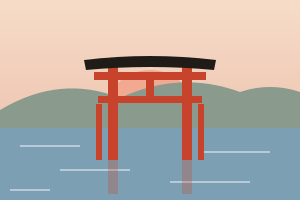
A sacred island of forested hills, temples and tame deer, best known for Itsukushima Shrine, built on stilts over the water, and its great torii gate.
- The floating toriiAt high tide the gate appears to float; at low tide you can walk out to its base across the sand. Check the tide table before you go — both are worth seeing.
- Itsukushima ShrineVermilion corridors over the sea. Entry ¥300.
- Mt MisenTake the ropeway most of the way up, then hike to the summit for views across the Seto Inland Sea.
- Daisho-inA temple of hundreds of small statues, prayer wheels and a cave of lanterns, on the lower slopes.
- Omotesando shopping streetGrilled oysters, anago-meshi (conger eel on rice) and momiji manju, maple-leaf-shaped cakes.
Stay the night
Most visitors leave by late afternoon. Stay on the island and you'll have the shrine, the lit-up torii and the deer almost to yourself in the evening and early morning. A ryokan night here is a highlight of many trips.
Getting there and around
- To Hiroshima: Nozomi from Tokyo in about 4 hours (¥19,760 reserved), or from Kyoto in about 1 h 40 min. The JR West Kansai-Hiroshima Area Pass (¥17,000 for five days) covers the trip from Osaka or Kyoto plus the Miyajima ferry.
- Around Hiroshima: trams run from the station to the Peace Park in about 20 minutes; there's also a loop bus.
- To Miyajima: JR train to Miyajimaguchi (about 30 minutes), then the 10-minute ferry. The JR ferry (¥180) is covered by the Japan Rail Pass and the JR West pass. Direct boats also run from the Peace Park.
- Miyajima visitor tax: ¥100 per visit, added to the ferry fare (rail-pass holders pay it separately at the pier).
Hiroshima Prefecture has charged an accommodation tax of ¥200 per person per night on rooms from ¥6,000 since April 2026.